


12/26 – Matthew 6:5-9ab – YwtC: Lord’s Prayer: Introduction
December 26, 2021
Grace, peace, and mercy be yours in Jesus’ name. Amen.
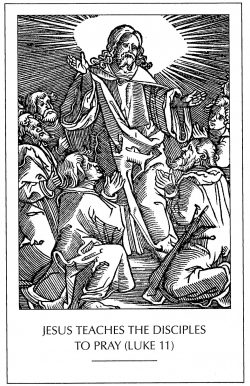
The subject we are beginning today is: Matthew 6:6-13 where Jesus teaches as follows:
When you pray, don’t be like hypocrites. They like to stand in synagogues and on street corners to pray so that everyone can see them. I can guarantee this truth: That will be their only reward.
When you pray, go to your room and close the door. Pray privately to your Father who is with you. Your Father sees what you do in private. He will reward you.
When you pray, don’t ramble like heathens who think they’ll be heard if they talk a lot. Don’t be like them. Your Father knows what you need before you ask him.
This is how you should pray: Our Father in heaven, let your name be kept holy. Let your kingdom come. Let your will be done on earth as it is done in heaven. Give us our daily bread today. Forgive us as we forgive others. Don’t allow us to be tempted. Instead, rescue us from the evil one.
Did you notice, Jesus repeated Himself three times saying, “when you pray…”?
“When you pray, don’t be like hypocrites.”
“When you pray, go to your room and close the door.…”
“When you pray, don’t ramble like heathens…”
Notice Jesus is assuming you pray.
After all, the hypocrites pray. The Gentiles, the unbelievers, pray. Certainly you should pray since your God is the living God Most High. Jesus’ point is, “when you pray…” don’t pray like they do. They pray to be seen and heard by other people. You pray to be seen and heard by God your heavenly Father. “Pray privately to your Father…” “Pray like this: ‘Our Father in heaven…’”
The tricky thing about preaching on “prayer” is that even though it is a precious, gracious, divine gift God gives to His believers, we have to be told, even commanded, to take it and use it. Not because we’re too humble thinking, ‘oh, no really, I couldn’t… I don’t want to bother God,’ but rather because we’re lazy, undisciplined, maybe unappreciative, and we don’t believe it’s important.
Our lack of desire to pray has to be one of the most condemning pieces of evidence against us concerning what sin has done to us. We usually think of ‘sin’ in terms of the bad things we do. The fact that we lack interest in this gracious gift God gives to us is a telling sign.
So we must be commanded to pray. We must actually be threatened that if we do not pray we sin against God. If you want to check the official Law about this you can find it in the Ten Commandments, where it says:
You shall not misuse the name of the Lord your God.
What does this mean?
We should fear and love God so that we do not curse, swear, use satanic arts, lie or deceive by His name, but call upon Him in every trouble, pray, praise and give thanks.1”
Really, what that say about us, is the Almighty God must beg us to take His gift? God says:
“Call upon me in the day of trouble and I will deliver you…2”
To that we say, “Ok, as a last resort, if I can’t think of anything else to do.”
God says:
“Ask, and it will be given to you;
seek, and you will find;
knock, and it will be opened to you,3”
To which we say, “well if I ever get desperate I suppose I might let You know.”
What does this say about the Triune God, that He humbles Himself, and begs us to take the precious gift of His Holy Name, so that we may call upon Him!? Him! Not an anonymous “higher power” or “spiritual force,” or “god – how ever you imagine god to be.”
He sends His Holy Spirit, who calls us by the Gospel, and creates in us the desire to ‘call back’ to that gracious and loving voice that we hear in the inerrant, infallible, trustworthy and true, Word of God. In our desire to cry out to God, we say, “I don’t know what to say. I don’t know what to ask. Teach me how to pray.” There is where the Holy Spirit points us to Jesus, who says, “Pray like this… Our Father, in heaven…”
With these words, the floodgates of Heaven are thrown open to us.4 At Jesus’ baptism in the Jordan River, Luke reports:
“While He was praying, heaven opened, and the Holy Spirit came down to Him in the form of a dove. A voice from heaven said, ‘You are My Son, whom I love. I am pleased with You.5’”
Over and over again throughout the Gospels,6 Jesus refers to God as “My Father.” Isn’t it the most amazing thing, that when Jesus teaches us how to pray, He invites us to call on, “our Father who is in Heaven.” Jesus is giving us His own identity before the Father. Because of His love He decided to adopt us as His very own children. He freely chose to do this.7 Jesus says that we should consider His Father to be our Father.
Which can only mean that we poor, miserable sinners, are loved by the Father just as Jesus is the “beloved Son” of the Father. The Father is “well pleased” with us, just like He is with Jesus.
This can only mean all of our sins have been removed from us as far as the East is from the West;8 paid for, because Jesus carried all of our sins to the cross; even our sins against the very Commandments of God. Even sins against the very name of God.
That is why we only dare to pray to a Holy Living God, in the name of Jesus, who has reconciled us to the Father by His Body and Blood shed for us. Jesus teaches us, “No one comes to the Father except through Me.9” It is because no one is acceptable to the Father except the one who believes in Jesus and comes in His Name. John the disciple writes to the churches:
The Father has given us his love. He loves us so much that we are actually called God’s dear children, and that’s what we are.10
Not just in name only, but through Holy Baptism where we were born again; we are “Fathered” by God; not just symbolically but in reality. No one comes to the Father symbolically, unless he only wants to be saved symbolically. We are, in reality, born again in Holy Baptism and, in reality, really forgiven, and really saved.
In the same reality by which He created everything out of nothing in the beginning, by the power of His Word,11 He has spoken that same all-powerful Word on you:
“I baptize you in the name of the Father, and of the Son, and of the Holy Spirit.12”
St. Paul states the new reality of your life like this:
You have not received the spirit of slaves that leads you into fear again. Instead, you have received the spirit of God’s adopted children by which we call out, “Abba!”13
Of course what that means is this new reality as a child of God is placed on all who are Baptized. Just think about that. When we pray as our Lord has taught us, “our Father,” we praying with: Abraham, Isaac, Jacob, David, Matthew, Mark, Luke, John, Paul and all of the children of God, past, present and future, the one true Holy Christian Church, the communion of saints. We come before God the Father in the name of God the Son, through the power of God the Holy Spirit, “to ask as dear children ask their dear father.”
How often have you heard someone say, “I pray to a ‘higher power’ or ‘a deity that is out there somewhere’ and I hope my prayers are heard.” Perhaps you have even had that thought a time or two.
We acknowledge that we are in trouble and need help because we don’t have all of the answers. We acknowledge we have sinned and need forgiveness because the guilt is wearing on us. We acknowledge we have been blessed and we need to give thanks to the Giver. So we pray, and we wonder, is there anyone out there? Is there anyone who hears me, and who will answer me?
Then here, in the Lord’s Prayer, everything gets turned upside down. Here is God, who has come down from beyond the limits of time and space; who has come into our world, into our life, into our trouble, into our sorrows, into our joys.
It is there we realize this is God who is calling to us. This is not God who is far away from us, whose attention we must somehow grab, so He will hear us. Not at all! In Jesus Christ we realize it is we who are far away from God and He comes to us. Not as an impersonal, anonymous spirit-being, but with His name and His Body and His Blood. The Father who is in Heaven has come to us in His Son who says, “I am with you always.14”
That’s why we don’t need to shout, dance or waive our hands to attract His attention. We always have it. This means when we pray, we do so with the confidence that this is never a “shot in the dark” launched to a “cosmic power,” or “nameless deity,” whom we are trying to find. We pray with the confidence that God the Father of our Lord Jesus Christ knows us, has found us and always hears us. Then teaches us, “this is how you should pray, ‘Our Father in heaven.’15”
This leads to something else Jesus says about prayer. You know how it is when you really know someone or when someone really knows you. You know what they’re thinking and what they want without them actually having to say it. So, if we can know one another this well, shouldn’t we expect that God our Father knows us even better? In fact, Jesus says, “your Father knows what you need before you ask Him.16”
This means when we pray, we should not think that we are bringing something to the Father that is new to Him, or that He does not already know. There is no need for us to feel we need to give all kinds of reasons, or explanations, or pray louder or longer, to instruct Him or persuade Him. He knows us better than we know ourselves. He knows what we really need better than we do.
Left to our own devices, we pray for what we think we need, but which perhaps more often than not is actually what we do not need. We are worried and instead of praying for real peace and contentment we pray for more money which only leads to more worry. We have desires for things we think we cannot live without, but instead of praying for real freedom, we pray for more of the very things, those very idols, that control us.
No matter how long or loud we ramble on to the Father in prayer, He will not, for one moment, be diverted from giving us what we truly need. He is after all our loving Father in Heaven. To which we should respond with utter relief and hearts full of thanksgiving.
We should give thanks that our prayer does not depend on our expressing everything correctly, or on making the correct diagnosis of our real problem that we may not know or understand. We should give thanks that our prayers, so often thought of as unanswered, because we don’t get the answer for which we were looking, are given the answer we need. We should give thanks that our Father in Heaven knows what is best for us, and works all things for good for us,17 even at the cost of His only-begotten Son, crucified on the cross for us.
Jesus says, “This is how you should pray: Our Father in heaven…” To put it simply:
With these words God tenderly invites us to believe that He is our true Father and we are His true children, so that with all boldness and confidence we may ask Him as dear children ask there dear Father.18
In Jesus’ name.
Amen.
=======
NOTES
1Luther’s Small Catechism
2Psalm 50:15
3Matthew 6:7-11
4Malachi 3:10
5Luke 3:21-22
6The four books in the Bible: Matthew, Mark, Luke and John
7Ephesians 1:5-6
8Psalm 103:12
9John 14:6
101 John 3:1
11Genesis 1:1
12Matthew 28:19
13Romans 8:15
14Mathew 28:20
15Matthew 6:9
16Matthew 6:8
17Romans 8:28
18Luther’s Small Catechism


Leave a Reply